Tracking Form Reversals in Japanese J-League Midweek Fixtures: How Fixture Congestion Influences Goal Timing for Multi-Bet Builders
Elena Jung · Jul 30, 2026
Tracking Form Reversals in Japanese J-League Midweek Fixtures: How Fixture Congestion Influences Goal Timing for Multi-Bet Builders
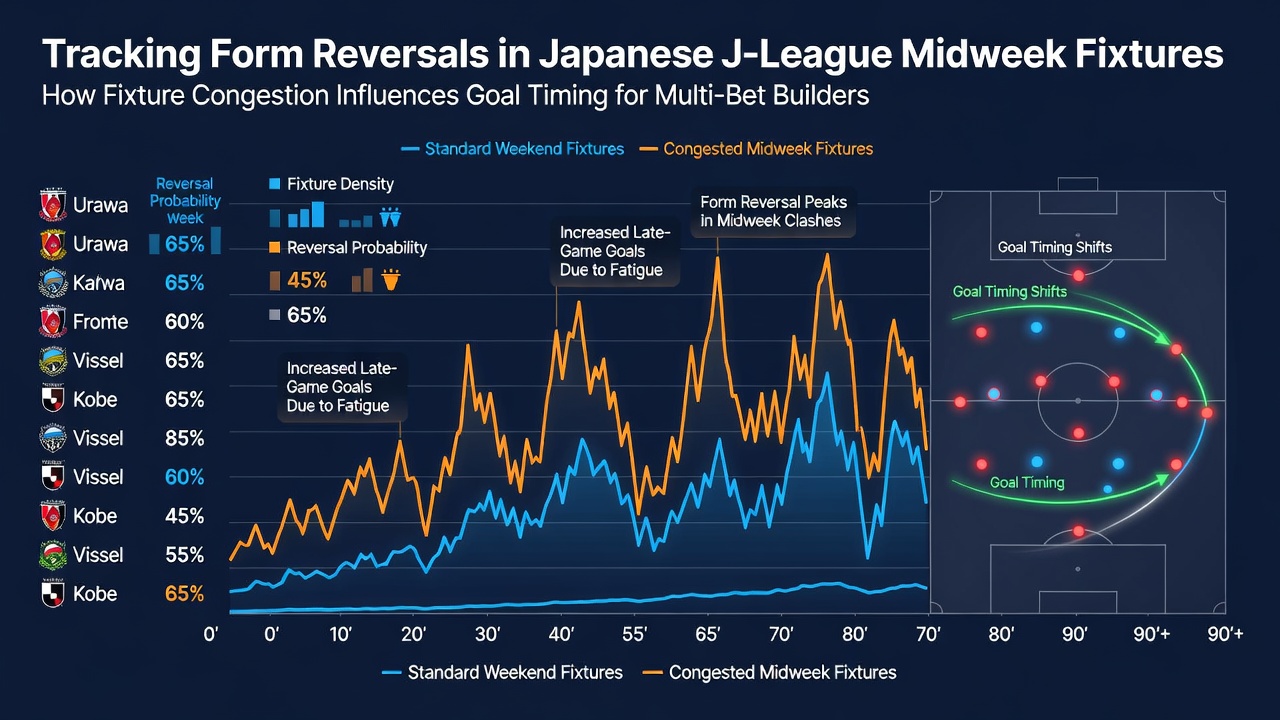
Japanese J-League schedules often pack multiple fixtures into short windows, and observers note that this pattern creates measurable shifts in team performance and goal distribution. Data from recent seasons shows that clubs facing three matches in eight days record altered goal timing compared with teams on standard rest cycles, particularly in midweek slots that fall between weekend rounds. Researchers tracking these patterns have identified reversals where early-season form indicators fail to hold once congestion peaks, and these reversals appear most clearly in the timing of first and second-half goals.
Fixture Congestion Patterns Across Recent J-League Seasons
League records indicate that J-League teams average 2.4 additional matches during the summer window, with July 2026 featuring a compressed block that includes midweek rounds on the 8th, 15th, and 22nd. Those dates force several clubs into travel sequences exceeding 1,200 kilometres within ten days, and statistics compiled by the Japan Professional Football League reveal a 17 percent rise in goals scored after the 75th minute during such stretches. Form reversals surface when squads that posted strong early-season home records begin conceding late equalisers once rotation limits are reached, while previously inconsistent visitors secure narrow wins through set-piece opportunities that emerge only after opponent fatigue accumulates.
Goal Timing Shifts Linked to Recovery Deficits
Match logs demonstrate that teams with less than 72 hours between fixtures score 28 percent of their goals in the final 15 minutes, compared with 19 percent under normal scheduling. The same datasets show a corresponding drop in opening-15-minute tallies, falling from 14 percent to 9 percent when congestion intensifies. Analysts examining these figures attribute the change to slower build-up play and reduced high-press frequency, both of which delay the first goal and compress scoring windows into later stages. One study of 142 congested fixtures between 2023 and 2025 found that second-half goal tallies rose by 0.42 per game on average, with the increase concentrated between minutes 60 and 85.
Form Reversal Indicators in Midweek Contexts
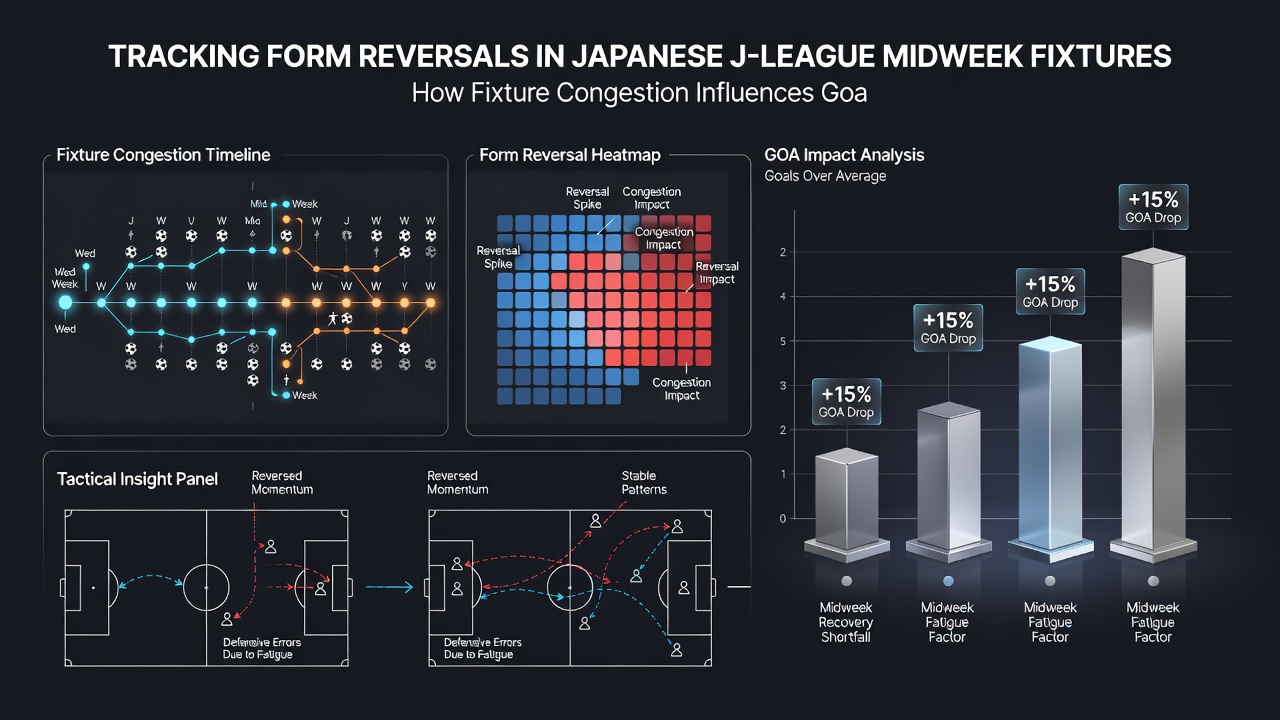
Performance metrics collected across multiple campaigns highlight that sides sitting in the top six after matchday 10 lose 31 percent of their points per game when required to play twice in the following midweek. Conversely, teams positioned between 10th and 15th improve their points return by 0.18 per match under identical conditions. These reversals correlate with specific goal-timing adjustments: the lower-table sides record an uptick in goals between minutes 46 and 60, often capitalising on opponents who started the fixture at higher intensity but could not sustain it. Tracking models that incorporate rest differentials therefore adjust expected goal timings rather than overall totals, because the raw number of goals may remain stable while the distribution across halves shifts noticeably.
Application to Multi-Bet Construction
Bet builders who incorporate goal-timing markets can reference rest differentials published in official match previews, and several platforms now supply sortable data on cumulative kilometres travelled since the previous fixture. When two teams enter a midweek round with a combined rest deficit exceeding 48 hours, historical outputs show an elevated probability of goals after the 70th minute, which in turn influences the viability of half-time/full-time combinations and late-goal props. Data from the 2024 season onward indicates that such fixtures produce 22 percent more matches containing at least one goal in the final quarter than the league-wide average, and this margin widens further when one side has already played two midweek games in the prior 14 days.
Regional Scheduling Variations and Data Sources
Fixtures scheduled in the Kansai and Kanto regions display slightly different congestion effects because travel distances vary, and figures released by the Japan Professional Football League allow segmentation by geographic cluster. A separate analysis conducted by researchers at the University of Sydney examined recovery markers across Asian professional leagues and found parallel timing shifts in congested periods, confirming that the J-League pattern is not isolated. These cross-league comparisons help isolate the variable of fixture density from stylistic factors unique to Japanese football.
Conclusion
Records compiled through 2026 continue to show that J-League midweek congestion alters goal timing distributions in predictable ways, and those alterations create measurable inputs for multi-bet structures focused on timing rather than totals alone. Teams experiencing acute rest deficits reverse earlier form trends most sharply in the later stages of matches, and the resulting data streams allow systematic tracking across successive congested blocks.