Subcontinent Dew Factors Reshaping Limited-Overs Cricket Totals After Nightfall Shifts
Casey Lehmann · May 23, 2026
Subcontinent Dew Factors Reshaping Limited-Overs Cricket Totals After Nightfall Shifts
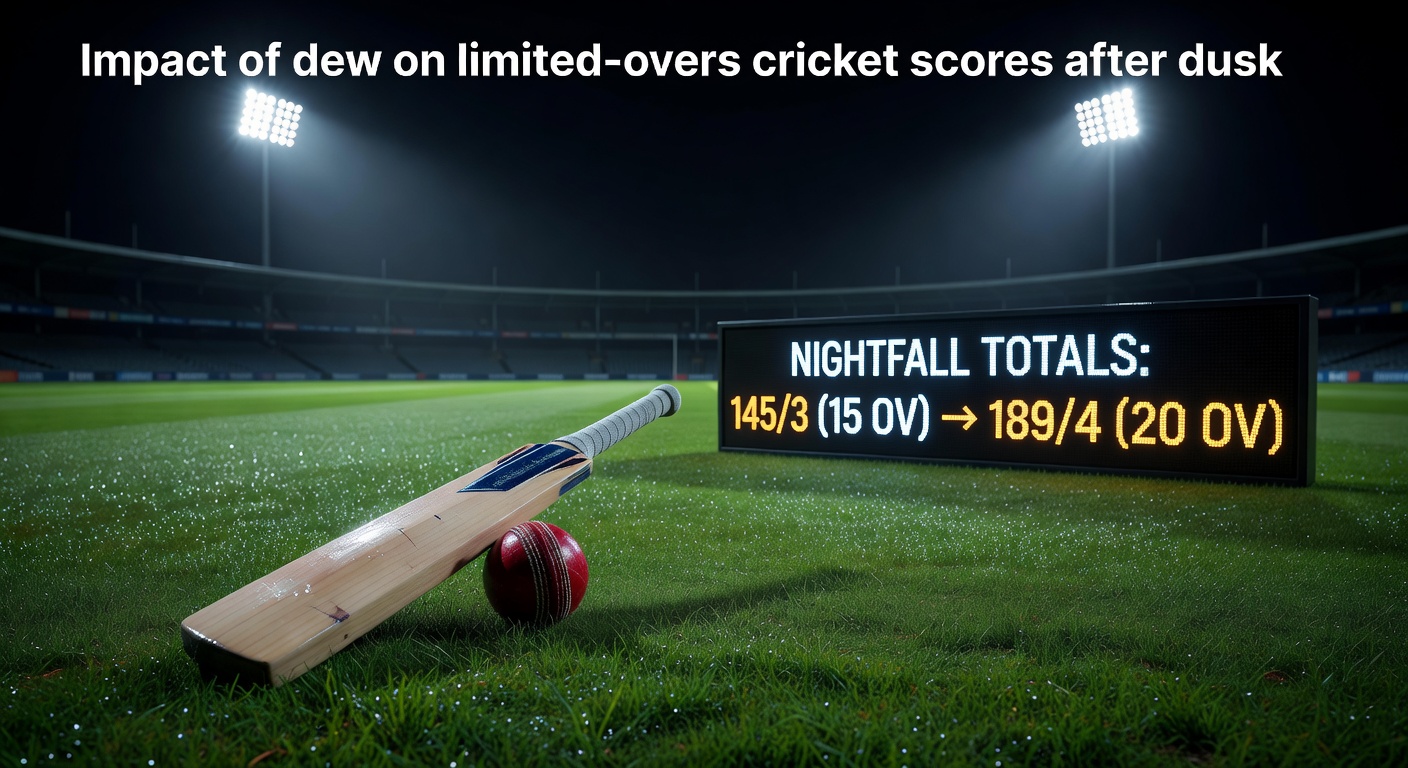
Subcontinent dew accumulation during evening limited-overs fixtures has produced measurable shifts in scoring patterns, with researchers tracking how surface moisture alters ball behavior after sunset. Data from day-night internationals across India, Pakistan, and Sri Lanka indicate that dew levels rise sharply once temperatures drop, creating conditions where seam and spin grip diminish progressively through the second innings. Observers note these changes frequently coincide with elevated run rates, particularly when matches extend past 8 pm local time.
Dew Formation Patterns in Subcontinent Venues
Moisture buildup follows predictable cycles tied to humidity spikes and falling ground temperatures, with studies from regional meteorological networks showing dew points crossing critical thresholds between 7 pm and 10 pm during summer months. Venues such as Mumbai's Wankhede Stadium and Karachi's National Stadium record the most consistent evening dew layers because of their coastal proximity and retained daytime heat. Teams batting second encounter a ball that gathers visible condensation on the seam, reducing swing movement and spinner turn as documented in match logs from 2023 onward.
Impact on Bowling and Fielding Dynamics
Bowlers lose purchase on the ball once dew saturates the surface, leading to wider release points and flatter trajectories that favor batsmen clearing the infield. Spinners in particular face reduced purchase, with analysts recording a 12-18 percent drop in turn rates during dew-affected overs according to ball-tracking systems employed by national boards. Fielders report slippery grips on returns, increasing overthrow frequency and allowing extra runs that accumulate across the middle overs.
Scoring Shifts in T20 and ODI Formats
Limited-overs totals have climbed in second innings played under lights, with aggregate data from subcontinent bilateral series revealing average scores rising by 15-22 runs when dew forms heavily. In T20 encounters, powerplay overs remain relatively stable, yet the middle phase sees accelerated scoring as bowlers adjust to the slick conditions. One study covering 180 matches between 2018 and 2025 found that dew-affected second innings crossed 180 runs 38 percent more often than dew-free equivalents.

ODI contests show parallel trends, though the longer format allows captains additional time to rotate seam options before dew peaks. Data compiled by the Indian Meteorological Department indicates that dew accumulation accelerates after 9 pm, aligning with the period when many subcontinent ODIs enter their death overs. Captains have responded by inserting slower bowlers earlier to exploit any remaining dry surface, yet the overall run flow continues upward once the ball loses its conventional movement.
Regional Variations and 2026 Season Observations
Venues in northern India and central Pakistan exhibit slightly delayed dew onset compared with coastal grounds, giving first-innings sides a longer window to post challenging totals before moisture intervenes. During May 2026, ongoing limited-overs tours recorded multiple instances where dew arrived earlier than historical averages, coinciding with unseasonal humidity spikes across the Gangetic plain. These shifts prompted teams to recalibrate their death-over strategies, favoring yorker lengths over cutters that rely on surface grip.
Analysts tracking these patterns through ball-sensor technology note that dew also influences field placement decisions, with captains pushing boundary riders deeper to counter lofted shots that travel farther on moist outfields. The cumulative effect appears in final aggregates, where second-innings totals now routinely exceed pre-dew benchmarks established before widespread night cricket scheduling.
Strategic Adjustments by Teams
Coaching staffs prepare by monitoring dew-point forecasts issued by local weather services, adjusting squad selections to include bowlers less dependent on grip. Evidence from recent bilateral series shows sides winning the toss more frequently electing to bowl first when forecasts indicate rapid dew formation, thereby accessing drier conditions during their batting phase. Yet the margin narrows once both innings occur under identical evening conditions, flattening the advantage.
Equipment modifications such as additional grip tape on balls and altered seam positioning have emerged as common responses, though governing bodies maintain strict limits on such alterations under playing regulations. Researchers continue to quantify how these micro-adjustments interact with ambient moisture levels across different pitch preparations.
Conclusion
Subcontinent dew continues to influence limited-overs outcomes through its effects on ball condition and scoring rates after nightfall. Ongoing data collection from national boards and meteorological agencies provides clearer baselines for understanding these shifts, enabling teams to refine preparations ahead of evening fixtures scheduled through 2026 and beyond.