Pitch Condition Shifts During Twilight Hours Reshaping Handicap Calculations at Smaller UK Racecourses
Ellis Krüger · Jul 11, 2026
Pitch Condition Shifts During Twilight Hours Reshaping Handicap Calculations at Smaller UK Racecourses
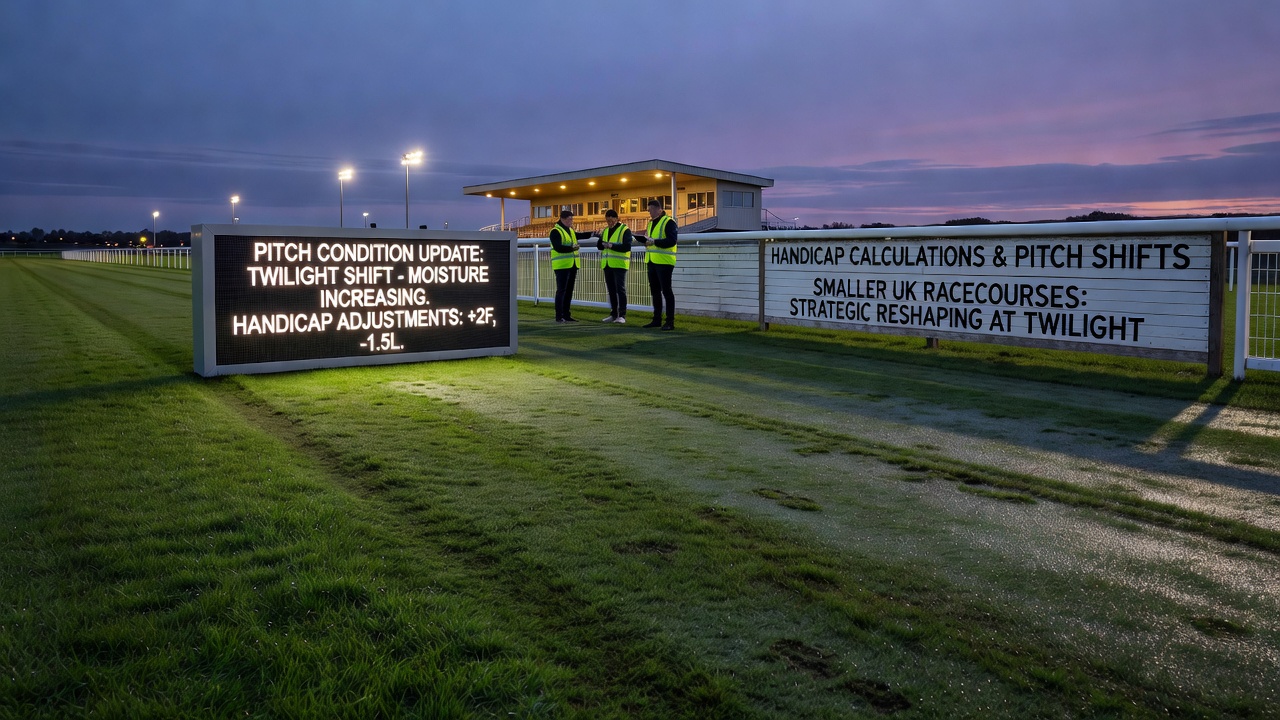
Smaller UK racecourses such as Fakenham, Fontwell Park and Market Rasen host evening meetings where twilight conditions trigger rapid changes in turf moisture and firmness levels, and these shifts directly influence the speed figures and weight adjustments that handicappers apply when compiling official ratings. Data from multiple seasons shows that surface temperatures can drop between four and seven degrees Celsius within ninety minutes after sunset, prompting dew formation that softens the top layer of grass while the underlying soil retains earlier firmness.
Mechanics of Twilight Surface Changes
Researchers at agricultural institutions have documented how relative humidity rises sharply during the transition period, and this increase combines with reduced solar radiation to accelerate moisture accumulation on the sward. At venues without extensive irrigation systems the effect appears more pronounced, because the natural grass cover responds faster to ambient cooling than the heavily managed tracks at larger courses. Handicappers therefore incorporate time corrections that account for the altered going description, which frequently moves from good to good-to-soft within a single card.
Clockers recording sectional times at these fixtures note that winning margins compress when the surface slows, and the resulting figures feed into the calculation of pounds per length that determine future weight allocations. One analysis of races run between 7 pm and 9 pm across three consecutive summers indicated an average increase of 0.8 seconds per furlong compared with identical distances contested earlier in the afternoon on the same tracks.
Impact on Official Handicap Ratings
Weight adjustments rely on comparative speed figures, so any unadjusted change in track conditions risks distorting the pounds-per-length scale used by the handicapping panel. Smaller courses submit their going reports to the racing authority at intervals throughout the evening, and these updates allow the system to apply variable going allowances that reflect the progressive softening. Figures compiled by independent timing services reveal that horses carrying higher weights in the later races of twilight cards often record lower speed ratings than expected, prompting downward revisions in their official marks for subsequent entries.
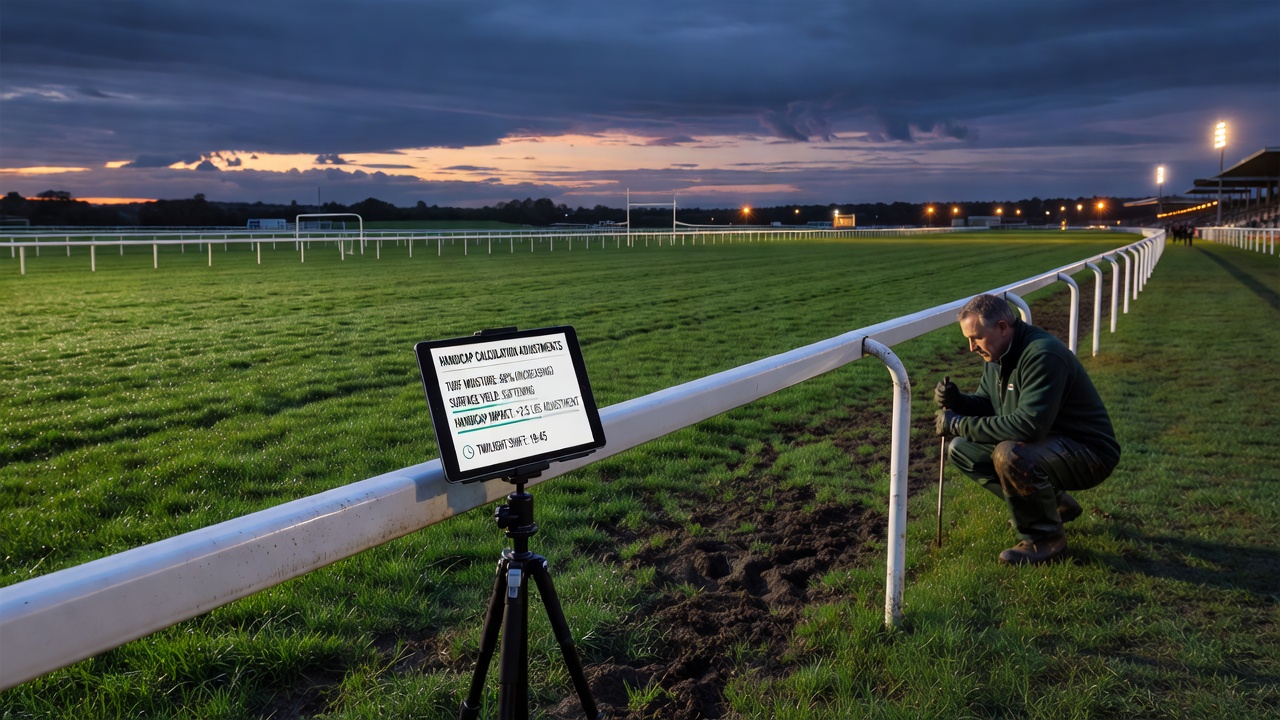
Trainers who study these patterns adjust their runners' preparation accordingly, scheduling workouts that replicate the expected evening surface rather than the firmer conditions prevailing at morning declarations. The British Horseracing Authority publishes aggregated data on time corrections applied across regional fixtures, and analysts cross-reference these reports with meteorological records to refine predictive models for future meetings.
Regional Variations and Data Sources
Venues in eastern England experience quicker dew formation because of lower overnight wind speeds, whereas western courses with higher rainfall averages show more gradual transitions that extend into the following morning. A collaborative study involving turf scientists from several European racing jurisdictions examined similar evening fixtures in Ireland and France, finding comparable moisture-driven shifts that required parallel adjustments to handicap calculations. Those findings align with observations recorded at UK tracks, confirming that the phenomenon occurs across temperate climates where grass surfaces dominate.
Industry reports from the European Pari Mutuel Association further detail how timing discrepancies accumulate when multiple twilight cards run consecutively, and the data supports the practice of applying dynamic rather than static going allowances during handicapping reviews. Observers note that courses which publish detailed sectional breakdowns enable more precise rating revisions, because the raw numbers highlight exactly where deceleration occurs as the surface changes.
July 2026 Fixture Implications
July 2026 schedules include several evening meetings at smaller venues where extended daylight hours still give way to pronounced cooling once the sun drops below the horizon. Handicappers preparing for these fixtures have begun incorporating historical twilight speed figures into their baseline calculations, and the approach reduces the margin of error when assigning weights for races that straddle the daylight-to-twilight boundary. Meetings scheduled in the first and third weeks of the month coincide with typical summer humidity patterns that amplify surface softening, according to long-term meteorological datasets maintained by national weather services.
Conclusion
Twilight-driven pitch condition changes at smaller UK racecourses continue to require ongoing refinement of handicap methodologies, and the integration of real-time surface data with established rating systems helps maintain consistency across the season. Continued monitoring of these patterns supplies the factual foundation for accurate weight allocations that reflect actual performance under evolving track conditions.