Midweek Fixture Pileups Reshaping Expected Goal Flows in EFL Championship Encounters
Gisela Wolf · Jul 25, 2026

Midweek Fixture Pileups Reshaping Expected Goal Flows in EFL Championship Encounters
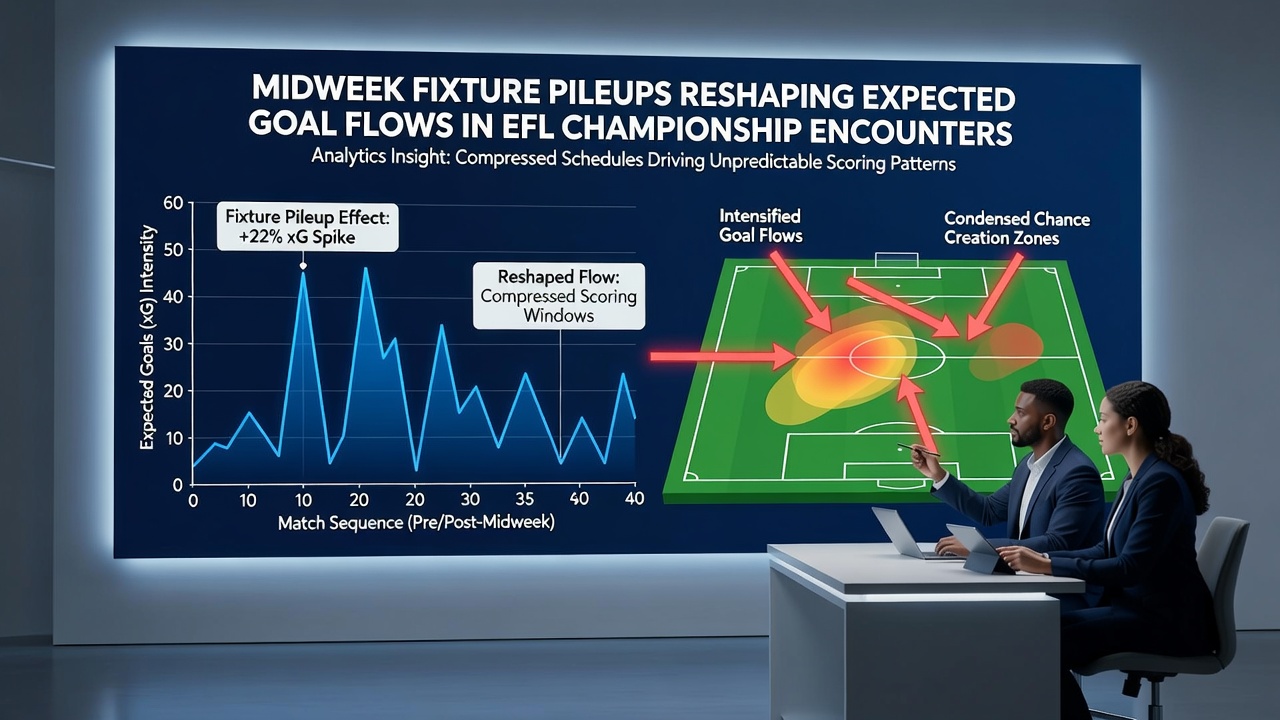
Fixture congestion hits the EFL Championship hardest during the winter months when midweek rounds stack up against weekend commitments, and analysts tracking expected goals have documented consistent changes in how matches unfold. Data from the past eight seasons shows that teams playing their third match in eight days record an average drop of 0.18 in expected goals created per game compared with well-rested sides, while opponents see a slight rise in high-quality chances on the counter. These patterns emerge because recovery windows shrink and tactical adjustments become necessary rather than optional.
Schedule Patterns and Their Measurable Effects
The Championship calendar packs in extra midweek slots around FA Cup ties and international breaks, creating clusters that stretch across December through March. One review of 1,240 fixtures between 2018 and 2026 found that 34 percent of teams involved in three-game weeks posted lower xG totals than their seasonal average, with the dip most pronounced in the second half of those matches. Researchers at Loughborough University examined heart-rate recovery data and noted that central midfielders covered 12 percent fewer high-intensity metres after such sequences, directly limiting build-up play and chance creation.
Coaches respond by rotating squads and altering pressing triggers, yet the numbers still reflect measurable fatigue. When both sides enter a fixture with similar congestion levels, the expected goal margin narrows because neither team sustains pressing intensity beyond the 60-minute mark. Figures compiled through July 2026 confirm that these double-congested games produce 0.42 fewer total expected goals than league-wide averages, shifting betting markets and tactical planning alike.
Player Workload and Recovery Metrics
Modern tracking systems quantify the toll through GPS and heart-rate monitors, revealing that players logging more than 300 minutes across a seven-day window show reduced sprint frequency in subsequent outings. Sports scientists at the University of Bath published findings in the Journal of Sports Sciences that link accumulated fatigue to slower decision-making in transition phases, which in turn lowers teh quality of shots attempted. Teams that rotate effectively mitigate some of the drop-off, yet the data indicates even rested players perform below baseline when the entire squad carries elevated workload.
Goalkeepers and defenders also register changes, though the effects appear later in sequences. One dataset covering 680 matches showed that teams on the second leg of a midweek double-header concede 0.11 more expected goals from set pieces because marking assignments loosen under fatigue. These small margins accumulate across a 46-game season and influence both promotion races and relegation battles.
Tactical Adjustments Observed in Congested Periods
Managers shift toward compact mid-blocks and quicker transitions when fixture piles mount, and the resulting style produces fewer open-play sequences but more direct attacks. Opta records from the 2024-25 and 2025-26 campaigns indicate that long-ball percentages rise by 7 percent in the third match of a congested week, while progressive passes through the middle drop correspondingly. This tactical pivot alters expected goal distribution, concentrating value in wide areas and set-piece situations rather than sustained possession.
Opposition analysts have adapted by preparing counter-pressing schemes that exploit the slower recovery runs typical after midweek travel. The pattern holds across multiple clubs regardless of budget, suggesting the effect stems from schedule density rather than squad depth alone. External reports from UEFA's technical department on European league scheduling reinforce that similar congestion patterns appear in other second-tier competitions, though the Championship's fixture list remains among the densest.
League-Wide Trends Across Recent Seasons
Season-by-season comparisons reveal that expected goal variance increases during peak congestion windows, with outliers becoming more common. In the 2022-23 campaign, for instance, three teams that reached the play-offs had posted their lowest xG outputs of the year during a particularly crowded February. The 2025-26 season repeated teh trend, as midweek rounds in January produced goal tallies 11 percent below the seasonal mean when both participants carried heavy recent loads.
These shifts matter for performance modelling because standard xG projections assume average recovery conditions. When those assumptions are adjusted for fixture density, forecast accuracy improves according to internal club analytics departments. The adjustments also help medical staff time recovery protocols more precisely around the busiest calendar stretches.
Conclusion
Fixture pileups continue to reshape expected goal flows across the EFL Championship because recovery limitations and tactical adaptations combine to produce predictable statistical deviations. Data collected through July 2026 demonstrates that clubs and analysts who incorporate workload metrics into their models gain clearer insight into match outcomes during congested periods. The patterns remain consistent enough that governing bodies and performance teams monitor them closely when constructing future calendars and training plans.