How International Breaks Reshape Domestic League Patterns Across Europe’s Top Divisions
Gisela Wolf · May 21, 2026
How International Breaks Reshape Domestic League Patterns Across Europe’s Top Divisions
International breaks interrupt domestic schedules in Europe’s major leagues and force clubs to navigate compressed calendars that alter match rhythms and squad demands throughout the season. Data from the past decade shows these pauses create measurable shifts in results, goal tallies and injury rates once play resumes, while governing bodies such as UEFA adjust fixture lists to accommodate both club and national-team obligations.
Fixture Scheduling and Congestion Patterns
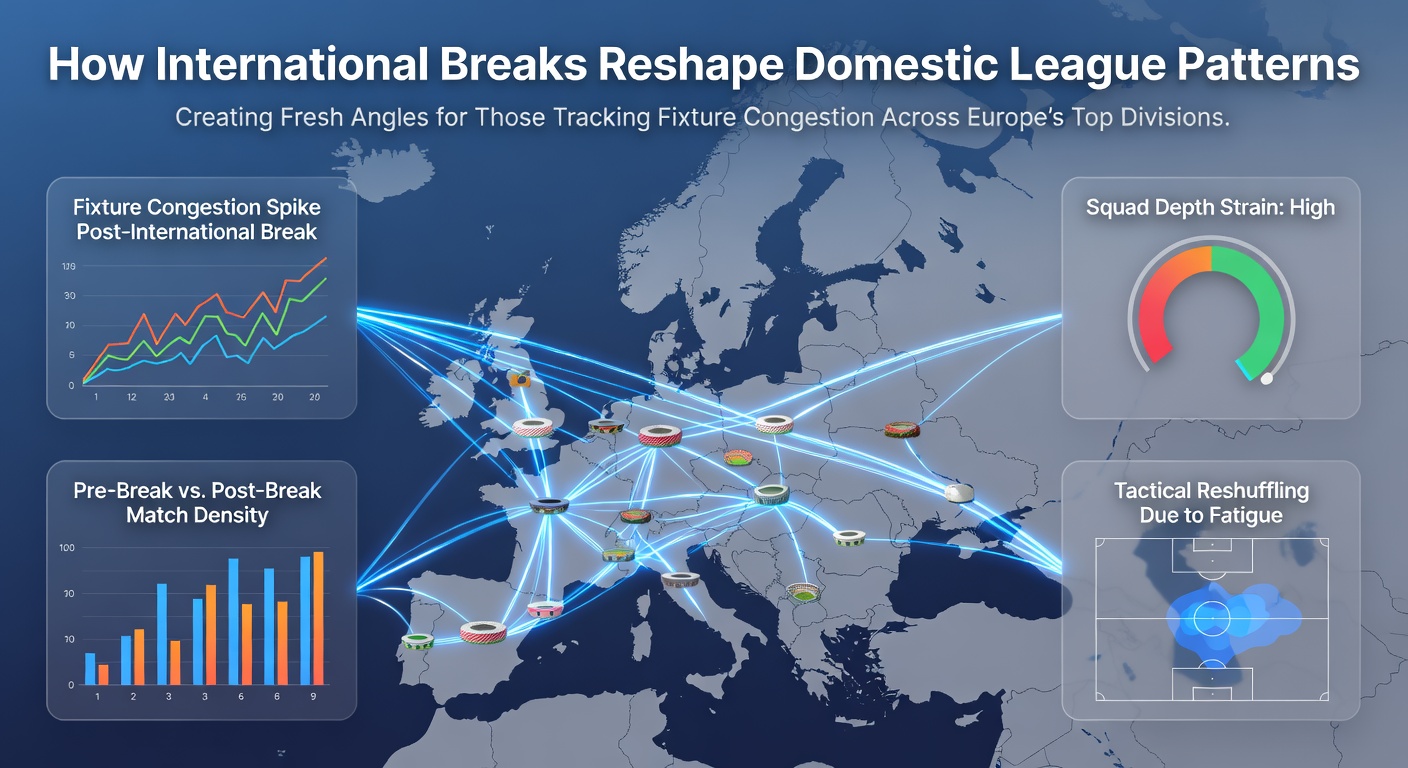
Leagues in England, Spain, Germany, Italy and France routinely face back-to-back domestic rounds after FIFA or UEFA windows close, and the resulting clusters of games produce distinct performance trends. Researchers tracking the Premier League and Bundesliga since 2015 have recorded higher average distances covered by players in the first two matches following a break, yet lower pass-completion rates compared with mid-season blocks without interruption. Those same datasets indicate that teams with larger squads tend to maintain points-per-game averages more effectively than smaller squads when three matches occur inside eight days.
Player Workload and Recovery Dynamics
National-team call-ups during September, November and March windows draw key personnel away from club training for up to ten days, and clubs must reintegrate those players while managing the residual fatigue. Studies published by the German Football League’s medical commission highlight that hamstring complaints rise by roughly 18 percent in the two weeks after players return from international duty. Clubs therefore rotate more aggressively in post-break fixtures, which in turn influences substitution patterns and late-game scoring distributions across La Liga and Serie A.
Regional Variations in Impact
Observers note that Bundesliga clubs, already operating with a shorter winter pause, experience sharper congestion spikes after the November break because domestic cup ties overlap with league rounds. In contrast, Ligue 1 sides often receive slightly longer recovery periods before the winter shutdown, yet still confront fixture pile-ups in April and May when European competitions continue. As May 2026 approaches, several top-division schedules already list five matches inside 21 days for clubs still active in continental tournaments, creating fresh data points for analysts monitoring workload metrics.
Statistical Angles for Performance Tracking
Analysts examining five seasons of Serie A results discovered that home teams post-international break post higher expected-goal values in the opening 30 minutes, while away sides concede more set-piece opportunities. Similar patterns appear in La Liga, where clean-sheet rates drop by approximately 12 percent in the first match after a break. These recurring trends supply concrete reference points for those monitoring fixture lists rather than subjective forecasts.
UEFA’s annual calendar reports document the total number of club matches displaced by international windows and show that the 2024-2025 season saw 142 domestic fixtures rescheduled across teh five biggest leagues. The same reports project comparable displacement figures for the 2025-2026 campaign, underscoring the ongoing structural pressure on domestic timetables.
Case Examples from Recent Windows
After the March 2025 international window, three Premier League clubs played four matches in 13 days and recorded an aggregate win rate of 42 percent, down from their season-long average of 51 percent. Bundesliga sides facing identical congestion posted a collective goal difference of minus four across those same fixtures. These outcomes align with broader datasets compiled by the European Club Association, which tracks squad-rotation frequency and subsequent performance dips.
Observers following Ligue 1 noted that teams returning from the November break scored 1.8 goals per game on average in their next three outings, compared with 1.4 goals during uninterrupted stretches. Such shifts appear consistently enough to warrant inclusion in any systematic review of league-wide patterns.
Emerging Monitoring Approaches
Clubs and external analysts now combine GPS workload data, recovery scores and fixture-density maps to anticipate where performance edges may appear. Academic papers from institutions in the Netherlands and Switzerland have begun correlating these metrics with match outcomes, revealing that teams managing more than 30 percent squad turnover after a break show reduced high-intensity running in the subsequent 90 minutes. These findings add another layer of objective reference material for anyone examining domestic schedules.
Links between international duty and domestic results continue to surface in publicly available match reports and governing-body statistics, allowing ongoing verification across multiple seasons and competitions.
Conclusion
International breaks impose recurring structural changes on Europe’s leading domestic leagues by compressing fixtures and altering player availability. Objective datasets from the past decade illustrate consistent shifts in scoring, rotation and injury metrics once matches resume, and these patterns remain visible as schedules move toward the closing weeks of the 2025-2026 campaign. Continued collection of workload and performance statistics will keep supplying verifiable reference points for those tracking fixture congestion across the continent’s top divisions.