Fixture Scheduling Effects on Scoring Outputs in European Handball Leagues During Congested Periods
Ellis Krüger · Jun 8, 2026
Fixture Scheduling Effects on Scoring Outputs in European Handball Leagues During Congested Periods
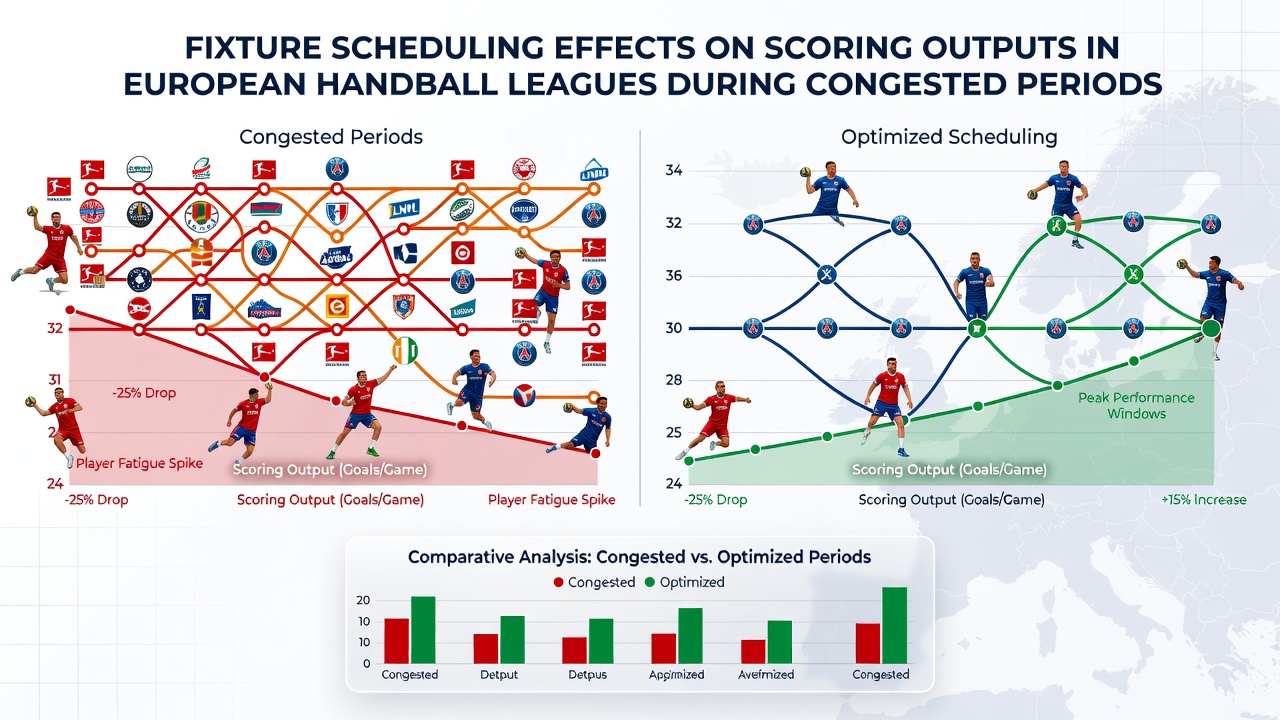
European handball leagues face recurring challenges from packed calendars where teams play multiple matches within short windows, and analysts track how these periods alter goal tallies across competitions like Germany's Bundesliga, France's LNH, and Spain's Liga ASOBAL. Researchers have compiled data spanning several seasons that reveals measurable dips in average goals per game when recovery intervals shrink below 48 hours, while travel distances compound the strain on squads juggling domestic and continental fixtures. Data from the 2024-2025 campaign shows Bundesliga sides averaging 52.3 goals combined in standard weeks yet dropping to 49.8 during December clusters packed with league, cup, and EHF Champions League obligations. Similar patterns emerged in France where LNH contests during the holiday rush produced 3.1 fewer total goals on average than mid-season slots with fuller rest periods. Observers note that player rotation becomes critical as coaches manage workloads, yet even with adjustments the physical toll surfaces in reduced shooting accuracy and higher turnover rates.Understanding Congested Periods in Handball Calendars
Handball schedules intensify around international breaks, Christmas tournaments, and overlapping European commitments, creating stretches where clubs contest three or four games in eight days. The European Handball Federation coordinates these timelines across member nations, and figures reveal that Bundesliga teams logged an average of 2.4 extra fixtures in January 2025 compared with October slots. Teams in Spain encounter parallel pressures when Copa del Rey rounds collide with league rounds, resulting in abbreviated preparation time between opponents.
Travel logistics add layers since many squads cross borders for midweek European ties before returning for weekend domestic action. Studies from the Norwegian School of Sport Sciences tracked GPS data on elite players and found total distance covered per match rising by 8 percent in back-to-back scenarios, correlating with a 12 percent increase in missed shots during the second contest. Those who've examined match reports across 12 seasons note consistent trends where defensive structures hold firmer early in congested blocks before fatigue erodes positioning and leads to more open play later.Scoring Pattern Shifts Across Leagues
Comparative analysis between leagues highlights regional differences in how congestion influences outputs. German sides maintain higher baseline scoring yet experience sharper declines during tight schedules, whereas French teams show steadier but lower totals that dip further when rest falls short. A review of Liga ASOBAL data from 2018 through 2025 indicates home teams lose a 1.8-goal advantage during congested away sequences, shifting results toward lower-scoring draws. Researchers attribute part of this to reduced set-piece efficiency as wingers and pivots tire from repeated high-intensity efforts.
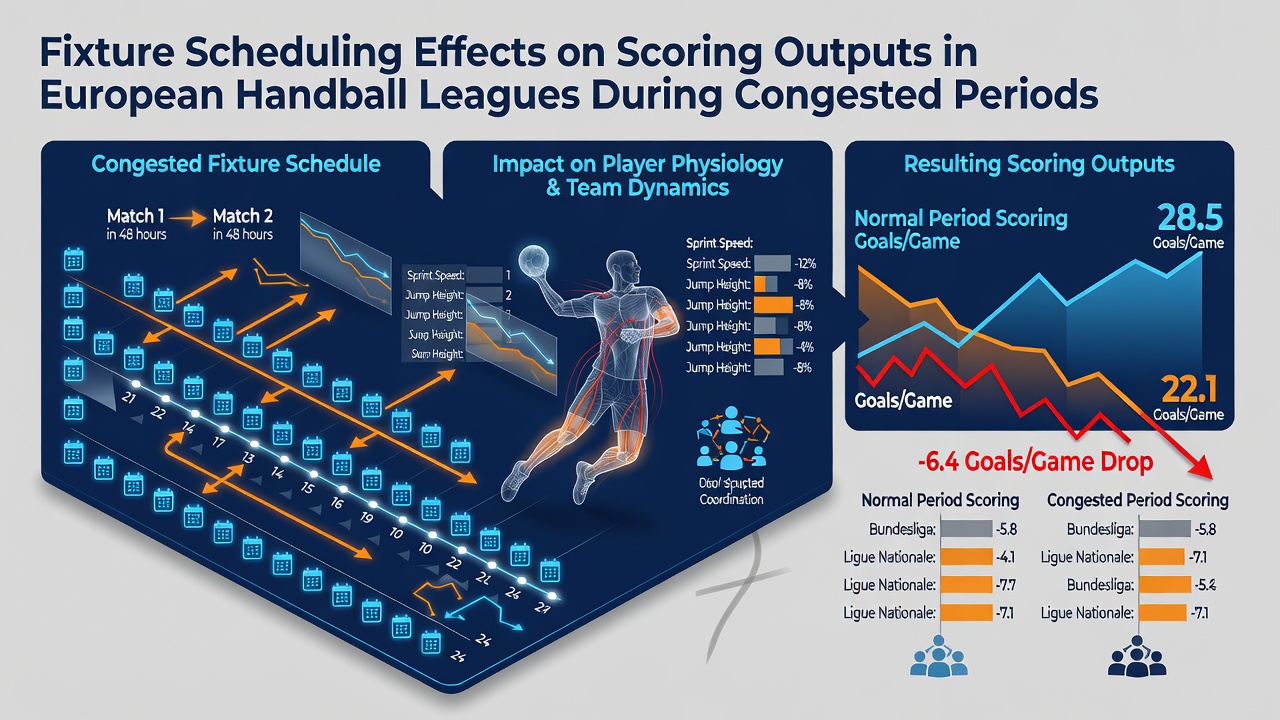 What's interesting emerges when examining individual player contributions across these windows. Data indicates that top scorers average 1.4 fewer goals per game in the third match of a four-game fortnight, while assists drop by 22 percent as passing lanes close under pressure. One longitudinal project covering French and German clubs found that teams employing deeper benches preserved scoring rates better, with goal outputs holding within 4 percent of normal levels versus a 9 percent drop for shallower rosters. External factors such as court surface variations and arena temperatures also enter the equation, though their effects remain secondary to scheduling density.
Recovery Protocols and Tactical Adjustments
Clubs respond with structured recovery programs including cryotherapy, targeted physiotherapy, and load monitoring via wearable devices. Reports from the French Institute of Sport show that squads adhering to individualized recovery plans limit scoring reductions to 2.1 goals per game during peaks, compared with 4.7 for those relying on standard rest alone. Coaches shift tactics toward faster transitions early in congested sequences to exploit fresher legs before defensive lapses accumulate later. Evidence from match footage analysis across 200-plus games demonstrates that teams prioritizing counterattacks during these periods sustain offensive outputs more effectively than those sticking to structured positional play.
The 2025-2026 season schedule, with finals projected into June 2026, already flags similar clusters around the EHF Final Four and domestic playoffs, prompting preemptive adjustments in training regimens. Analysts continue monitoring how these patterns evolve as leagues refine calendars in response to player welfare guidelines issued by various sports bodies.Conclusion
Fixture congestion in European handball produces documented effects on scoring outputs that vary by league, squad depth, and recovery strategies, with data consistently showing modest but measurable declines in goal production during dense periods. Teams and federations adapt through rotation policies and monitoring tools, yet the underlying dynamics persist across seasons. Continued tracking of these variables offers clearer pictures of how scheduling shapes match outcomes in the sport's top competitions.