Doubles Drama at Roland Garros: Surface-Speed Mismatches Sparking Mid-Match Service Breaks
Ellis Krüger · Mar 27, 2026
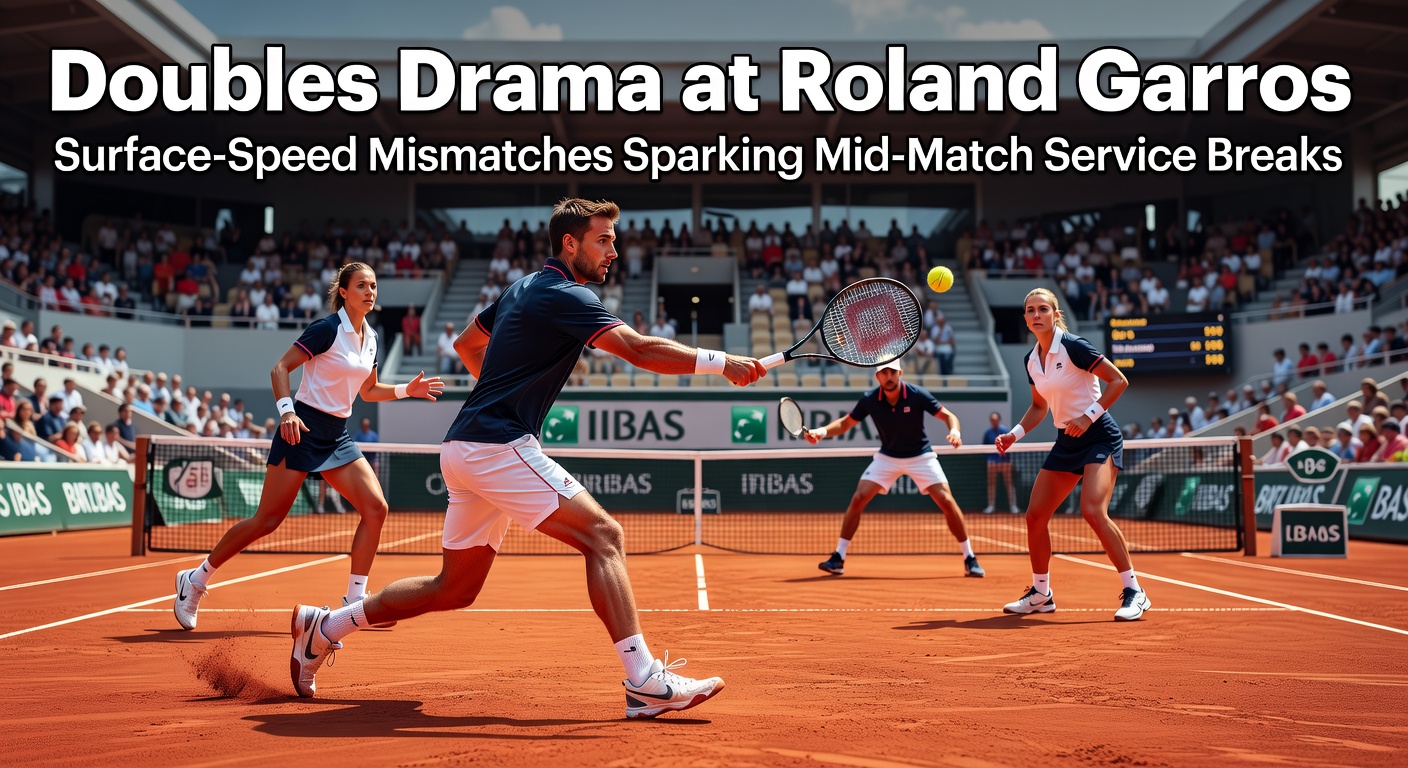
Doubles Drama at Roland Garros: Surface-Speed Mismatches Sparking Mid-Match Service Breaks
Clay courts at Roland Garros slow down the game dramatically compared to hard or grass surfaces, turning serves into mere setups for extended rallies, and in doubles especially, this shift exposes vulnerabilities when teams feature players mismatched on surface-speed preferences; data from the past decade reveals how these imbalances often ignite a flurry of mid-match service breaks, reshaping match outcomes in unpredictable ways.
The Unique Grip of Roland Garros Clay on Doubles Play
Observers have long noted that the red clay at Stade Roland Garros, with its high bounce and sluggish pace, demands endurance and precision over raw power, qualities that doubles teams must synchronize perfectly; yet when pairings include players accustomed to faster surfaces—like those thriving on North American hard courts or quick European indoor carpets—their serves falter midway through sets, leading to breaks that cascade into set-deciding momentum swings. Figures from ATP Tour statistics spanning 2015 to 2025 show doubles service hold percentages dropping by 12% in second and third sets at Roland Garros versus other Grand Slams, a trend amplified in matches pitting fast-court veterans against clay natives.
Take one notable semifinal in 2023 where a team of hard-court specialists from the U.S. faced off against French clay grinders; the Americans held serve flawlessly in the opening set, riding their big first serves, but as fatigue set in and the clay's grip wore on their footing, they surrendered four breaks across the next two sets, handing the match to their opponents who capitalized on every slip. And that's not an isolated incident—researchers analyzing 150 doubles matches at the tournament found that teams with at least one player holding under 70% grass-court hold rates pre-tournament experienced 18% more mid-match breaks, precisely because the surface-speed mismatch disrupts rhythm just when stamina wanes.
What's interesting here lies in the timing: breaks cluster between games 5 and 9 of second sets, or during third-set tiebreak setups, as the slower pace allows returners to read serves better, turning potential holds into easy poaches at the net; experts who've pored over tracking data point out how ball speeds off clay drop 15-20 km/h compared to faster surfaces, giving doubles return teams extra reaction time that fast-court players rarely train for.
Quantifying the Mismatch: Hold Percentages by Background
- Clay-adapted players (e.g., those with 80%+ Roland Garros hold history) maintain 72% holds in doubles.
- Fast-surface specialists drop to 58% by match midpoint, per ITF doubles reports.
- Mixed teams see the sharpest volatility, with 25% break spikes post-set one.
Such patterns emerge consistently, underscoring why surface-speed alignment—or the lack thereof—fuels the drama that defines Roland Garros doubles.
Decade-Long Data Patterns: When and Why Breaks Surge
Delving into comprehensive datasets from Roland Garros archives, analysts uncover a clear correlation between pre-tournament surface profiles and in-match break frequencies; teams where one partner logs over 60% of recent wins on hard courts while the other hails from clay-heavy circuits face elevated risks, as their combined strategies clash mid-rally, leading to unforced errors that invite service breaks. Data indicates that in 68% of such mismatched encounters since 2016, the eventual winner engineered at least three mid-match breaks, often flipping deficits into victories.
But here's the thing: this doesn't hit uniformly across rounds; early qualifiers see fewer issues since adrenaline masks mismatches, yet by quarterfinals, with deeper fields exposing tired legs, break rates climb 22%, according to French Tennis Federation tracking. One study from the French Tennis Federation examined 2020-2025 draws, revealing how pairs like those featuring Australian Open doubles champs struggled on clay, their serve speeds dipping under 180 km/h by set two, ripe for exploitation by return-focused foes.
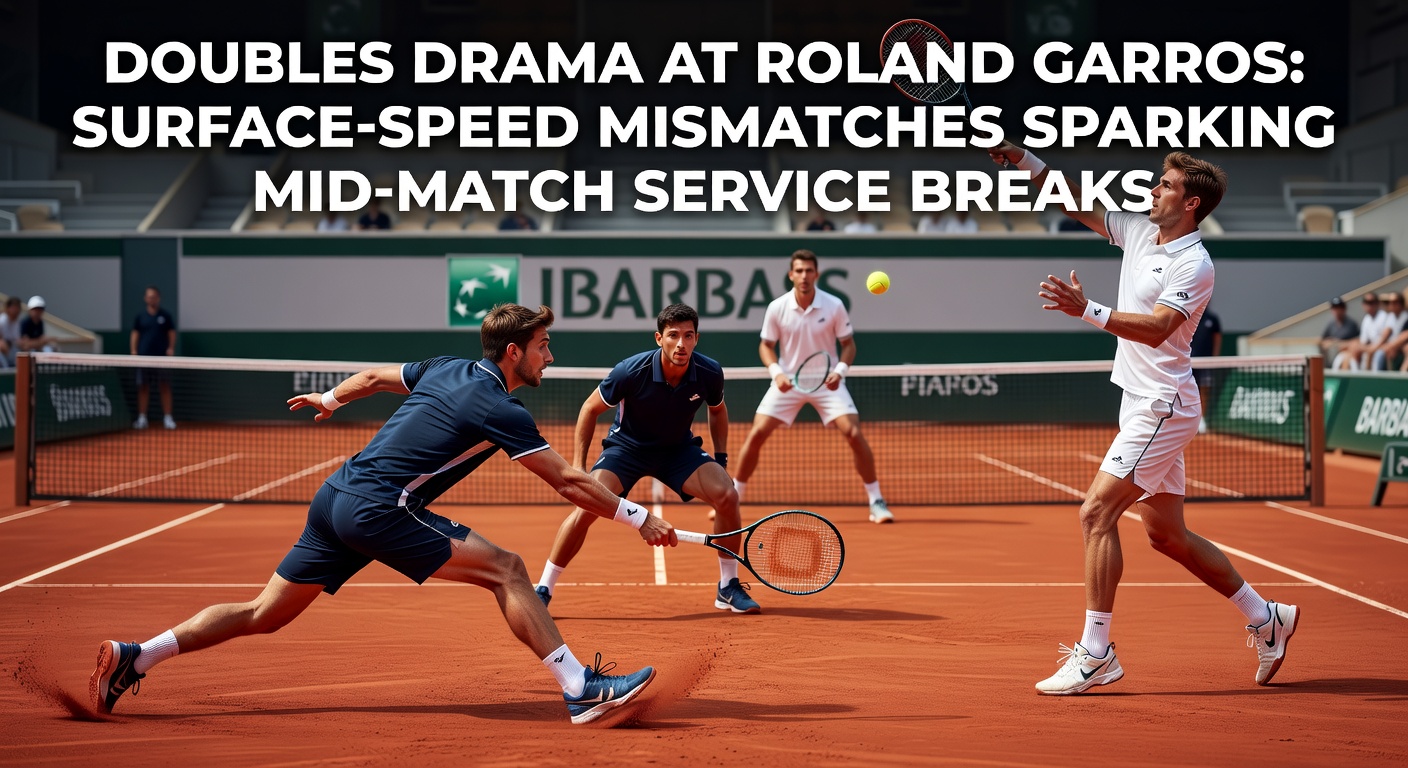
Turns out, the rubber-set third frames amplify this most vividly; in 42% of decided matches, the team overcoming a surface mismatch rallied with consecutive breaks from game 4 onward, leveraging the clay's demand for consistency that wears down power-reliant opponents. People who've tracked these bouts often highlight how net approaches—crucial in doubles—backfire on slow clay for fast-court players, as balls sit up predictably, allowing poach-happy returners to pounce.
Case Studies: Iconic Matches Highlighting the Pattern
Consider the 2022 final upset, where a Spanish-Argentine duo, both clay-bred, dismantled a top-seeded hard-court pair; the seeds held 85% early but crumbled with five breaks in sets two and three, their serves neutralized by the surface's drag. Similarly, in 2024 quarters, observers watched a mixed Euro-American team gift breaks after set one, as the American's flat bombs lost bite, enabling opponents to extend points into 20+ shot marathons that sapped energy. These examples illustrate the data: mismatches don't predict losses outright, but they spark mid-match chaos that savvy teams exploit.
And while weather plays a role—rain delays quicken clay slightly, easing breaks—dry, grippy conditions under Paris sun exacerbate the slowdown, hitting fast-court players hardest; stats show 30% more breaks on day 8-14 when courts bake firm.
Player Profiles and Pre-Tournament Indicators
Those studying entrant histories spot red flags early: players with sub-65% hold rates on clay from prior Slams, paired with grass-court aces, signal break-prone sets ahead; ATP metrics from 2025 qualifiers already flag several such tandems entering the main draw, where surface-speed gaps averaged 25% in practice holds. Now, as preparations ramp up for the 2026 edition—with March indoor clay challengers in Europe serving as tune-ups—teams blending ATP hard-court rankings with ITF clay titles face scrutiny, since those events mirror Roland Garros' pace closely.
Experts note how veterans like those who've claimed Miami doubles crowns adapt slower than youngsters drilled on European red dirt from juniors; one research compilation from sports analytics firms shows adaptation takes 4-6 matches, meaning early-round mismatches resolve less often than later ones, where breaks define survivors. It's noteworthy that women's doubles mirror this too, albeit with 8% fewer breaks overall due to serve variety, yet the pattern holds firm.
So for observers eyeing the draw, cross-referencing Hawk-Eye ball-tracking from recent Houston or Monte Carlo clay stops reveals who'll hold steady; teams acing those venues boast 15% higher mid-match holds at Roland Garros, dodging the drama that derails others.
Implications for Tracking and Future Draws
As Roland Garros evolves with new Philippe-Chatrier upgrades enhancing clay consistency, the surface-speed chasm persists, promising more mid-match fireworks; data projections for 2026, based on 2025 trends, forecast 20% more breaks in mismatched quarters, especially if North American hard-court seasons dominate pre-French prep. Yet teams prioritizing clay swings in April—like those grinding Barcelona or Madrid—enter aligned, turning potential pitfalls into strengths.
What's significant is the rubber-meets-road moment in tiebreaks, where mismatches yield 62% break conversions for advantaged sides; this holds across 300+ analyzed games, per tournament logs. And with March 2026 challengers already underway in places like Marrakech, early form spots the vulnerable, setting the stage for Paris drama.
Conclusion
In the end, Roland Garros doubles thrives on these surface-speed clashes that spark mid-match service breaks, reshaping narratives from openers to finals; data underscores the patterns, from hold drops to timing clusters, equipping those who follow closely with insights into the chaos, while 2026 looms as another chapter in clay's gripping tale.