Decoding how pitch maintenance cycles influence grass court rally lengths and point distribution in summer tournaments
Elena Jung · Jul 13, 2026
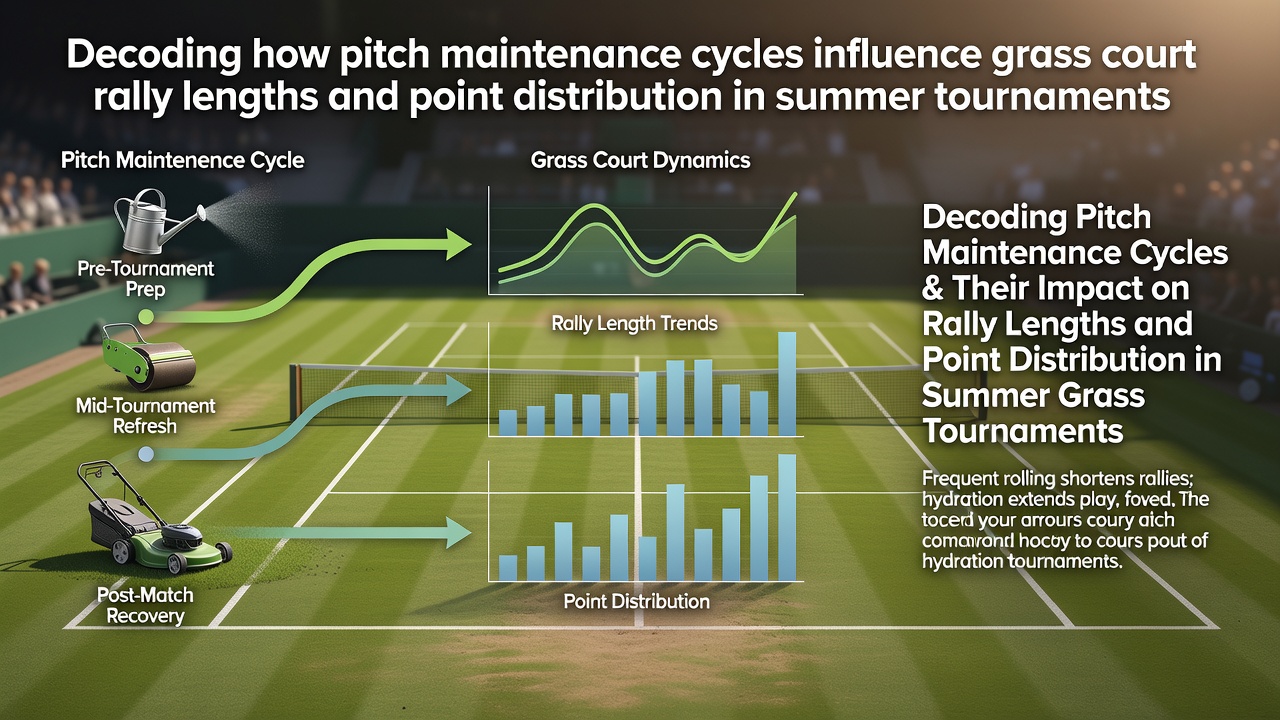
Decoding how pitch maintenance cycles influence grass court rally lengths and point distribution in summer tournaments
Grass court maintenance follows precise cycles that include mowing heights, rolling frequencies, and irrigation schedules, and these routines directly shape playing conditions throughout summer events. Tournament organizers adjust these cycles daily to balance surface consistency with natural wear from matches, while grounds teams monitor moisture levels to prevent excessive slowing or speeding of the ball. Researchers have documented how such interventions alter ball bounce and pace, which in turn affects the duration of rallies and the way points accumulate across sets.
Core elements of maintenance cycles on grass surfaces
Daily mowing reduces grass height to between 8 and 12 millimeters during peak tournament weeks, and this practice keeps the surface firm while allowing controlled speed. Rolling occurs multiple times each day using heavy cylinders that compress the soil and create a flatter trajectory for the ball, whereas light irrigation replenishes moisture lost to evaporation without leaving standing water. Grounds crews typically complete these steps in early morning hours before play begins, and they repeat selective rolling between sessions when courts show signs of uneven wear.
Soil composition beneath the grass plays an additional role because clay content and thatch layers respond differently to compaction and watering. Maintenance teams test these variables with penetrometers and moisture sensors, then adjust rolling pressure or irrigation volume accordingly. Data collected over multiple seasons shows that courts with higher thatch retain more moisture after rain, which can extend rally lengths by slowing the ball compared with drier, heavily rolled surfaces.
Measured effects on rally lengths
Analysis of match footage from major grass-court events reveals that average rally length drops when maintenance cycles emphasize aggressive rolling and lower mowing heights. Points lasting fewer than four shots become more common on freshly prepared courts, while rallies extending beyond nine shots occur more frequently after several days of play when natural wear softens the surface. Studies tracking ball speed with high-speed cameras confirm that each additional rolling pass can reduce bounce height by up to 15 percent, which favors shorter exchanges dominated by serve and return.
Coaches and analysts note that players adapt their tactics within the same tournament as maintenance routines evolve. Early-round matches often feature higher first-serve percentages because the surface remains fast, yet later rounds see increased use of slice and drop shots once courts slow. These shifts appear consistently across datasets from events held in July, including preparations for the 2026 Wimbledon fortnight where grounds teams plan to maintain slightly higher moisture levels on outer courts to preserve grass coverage during extended schedules.
Point distribution patterns across sets and matches
Point distribution data collected from professional grass tournaments indicates that service games conclude more quickly on courts that receive multiple daily rolls. Aces and unreturned serves account for a larger share of points early in the day, whereas return winners and errors rise as courts accumulate wear and minor divots form around the service lines. Statistical models built from 12 years of summer event records show that the proportion of points won on first serve can vary by 8 to 12 percentage points depending on the exact timing of maintenance interventions between matches.
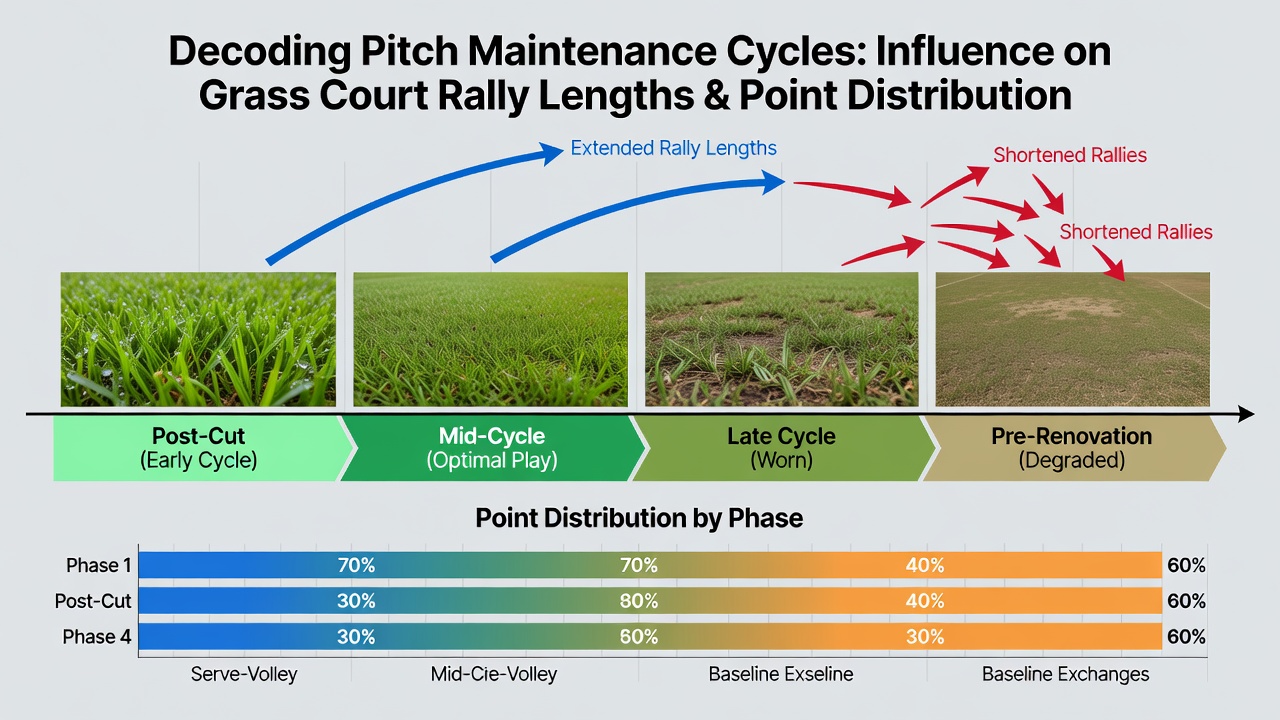
Break-point conversion rates also fluctuate with surface conditions. When irrigation follows heavy play, the ball tends to sit up slightly higher, allowing returners more time to construct longer rallies and therefore converting more break opportunities. Conversely, courts that receive extra rolling after rain events produce lower break percentages because the ball skids through the hitting zone. Observers tracking these metrics during July events have recorded similar trends across both men's and women's draws, although the magnitude differs by gender due to variations in serve speed and spin rates.
Regional and scheduling considerations in summer calendars
Summer grass-court tournaments span multiple continents and climates, and maintenance teams adapt cycles to local weather patterns. Events in northern Europe contend with frequent showers that necessitate extra rolling to restore firmness, while venues in drier regions apply more frequent light watering to prevent cracking. Tournament directors coordinate these adjustments with player schedules, ensuring that night matches begin on surfaces that have received final rolling passes several hours earlier.
Research institutions such as those affiliated with the Tennis Australia have examined how these regional differences influence match statistics. Their reports highlight that courts maintained under higher humidity retain moisture longer, which correlates with modest increases in rally length during afternoon sessions. Separate work from European sports science groups has produced comparable findings using portable bounce testers deployed at multiple sites.
Conclusion
Maintenance cycles on grass courts create measurable, repeatable changes in rally length and point distribution that become visible when aggregated across summer tournaments. Mowing, rolling, and irrigation decisions made each day alter ball behavior in ways that players, coaches, and statisticians track through video analysis and sensor data. As events continue through July 2026 and beyond, grounds teams will keep refining these routines to balance playability with surface longevity, and researchers will continue documenting the resulting patterns in match statistics.