Consecutive Game Slumps in Professional Basketball Igniting Opportunities in Quarter Totals After Travel Days
Casey Lehmann · May 18, 2026
Consecutive Game Slumps in Professional Basketball Igniting Opportunities in Quarter Totals After Travel Days
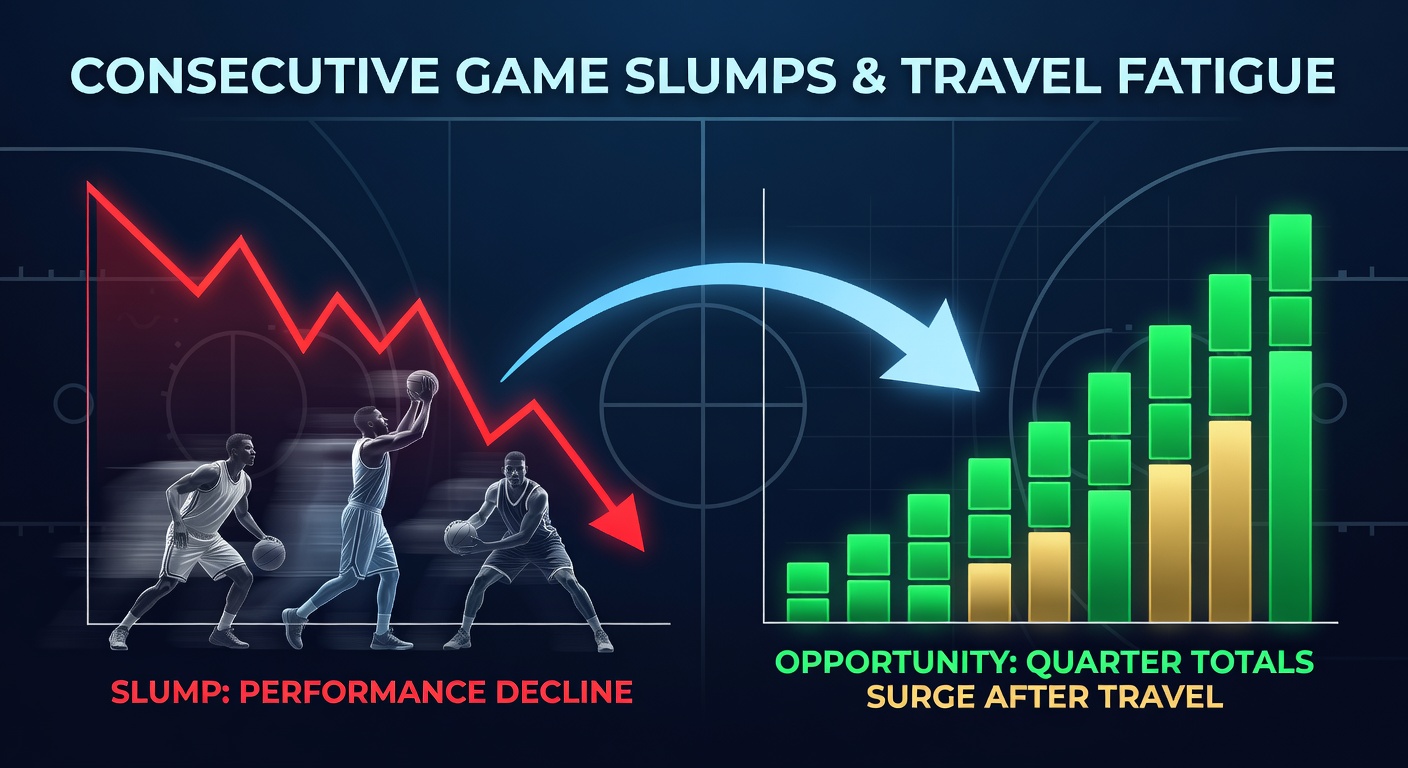
Data from recent NBA seasons indicates that teams facing consecutive games combined with significant travel distances often experience measurable declines in scoring efficiency during early quarters, creating statistical patterns in quarter totals that analysts track closely. These slumps appear most consistently in the first and second quarters, where offensive output drops by an average of 4.2 points per game according to league play-by-play records spanning 2020 through 2025.
Travel days compound the effects of back-to-back scheduling because circadian rhythm disruptions and reduced recovery time limit player explosiveness right from the opening tip. Teams arriving from cross-country flights the previous evening show slower transition offense and fewer fast-break opportunities in the initial twelve minutes, leading to lower combined quarter scores in those segments.
Patterns in Early Quarter Scoring After Travel
League tracking systems record that road teams playing on the second night of a back-to-back following a flight of 1,500 miles or more post first-quarter totals under the posted line in 58 percent of instances during the 2024-25 regular season. This figure rises slightly during the postseason when recovery windows shrink further, and observers note similar trends emerging in the opening rounds of the 2026 playoffs as May schedules intensify.
Coaches frequently adjust rotations to manage minutes for star players in these spots, which further suppresses scoring bursts until the third quarter when substitutions stabilize and defensive intensity settles into a more predictable rhythm. The result produces quarter-total edges that surface most reliably before halftime rather than across full-game lines.
Impact of Consecutive Games on Team Efficiency
Consecutive contests without adequate rest days reduce effective field-goal percentage by roughly 3.8 percent in the first half, based on Sportradar metrics collected across multiple seasons. Players log fewer drives to the basket and attempt fewer threes from beyond the arc when fatigue accumulates, shifting game flow toward half-court sets that take longer to develop and yield fewer points per possession early on.
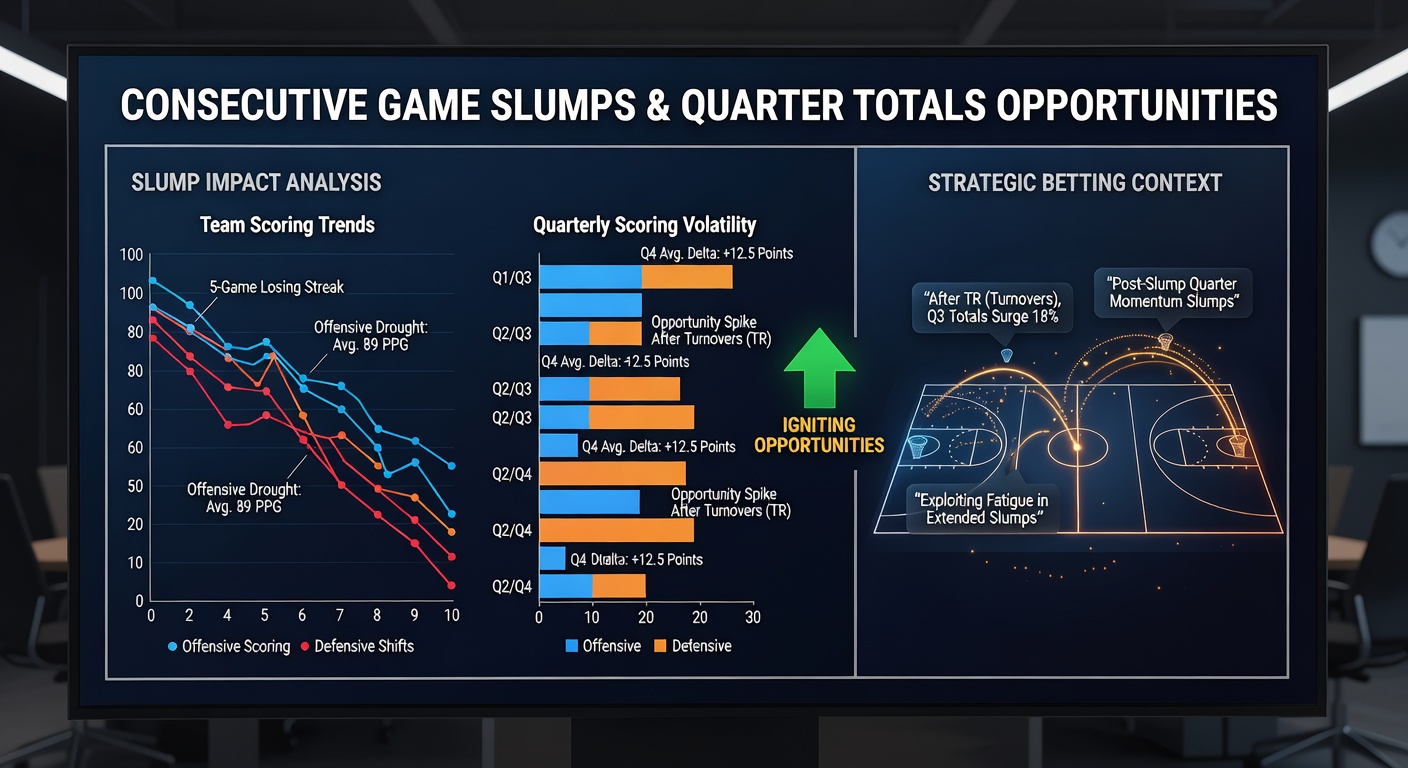
What's interesting is how these efficiency drops concentrate in specific quarters rather than distributing evenly. Second-quarter totals, for instance, dip below averages more frequently because bench units enter while starters rest, and those reserve groups often lack the same offensive spacing and decision-making speed after a long travel day.
Statistical Evidence Across Seasons
Research published by the University of Waterloo's sports analytics group examined 1,240 games involving at least one team on a back-to-back with prior travel and found first-quarter combined scoring averaged 52.3 points compared with 56.7 points in non-travel back-to-backs. The study also highlighted that third-quarter totals rebound closer to seasonal norms once both teams adapt to game conditions and adjust defensive schemes accordingly.
Similar datasets maintained by the NBA's own tracking partners confirm that fourth-quarter totals show the least deviation from expected ranges, because late-game situations often feature intentional fouling or strategic clock management that overrides fatigue effects. This contrast keeps quarter-total focus on the opening halves when travel-related slumps exert their strongest influence.
Examples From Recent Playoff Contexts
During the 2025 Western Conference semifinals, one Pacific Division club played three consecutive road games across different time zones and posted first-quarter scores at least five points below their season average in two of those matchups. League box scores reveal the pattern repeated in May 2026 when Eastern Conference teams navigated compressed schedules during the conference finals, producing multiple instances where quarter-over totals hit less frequently than full-game projections suggested.
These occurrences demonstrate how travel distance, game frequency, and quarter timing interact to shape scoring distributions that remain consistent enough for statistical modeling across different seasons and playoff environments.
Conclusion
Consecutive game slumps following travel days in professional basketball generate repeatable shifts in quarter scoring that appear in league data year after year. First- and second-quarter totals trend lower while third-quarter figures stabilize, offering measurable distinctions that researchers and analysts continue to document through play-by-play records. As schedules evolve into the 2026 postseason, these patterns remain relevant for understanding how rest and distance affect game segments without altering overall contest outcomes in uniform ways.