Altitude swings reshaping scoring rhythms across mountain-hosted fixtures and selective line movements
Casey Lehmann · Jun 13, 2026
Altitude swings reshaping scoring rhythms across mountain-hosted fixtures and selective line movements
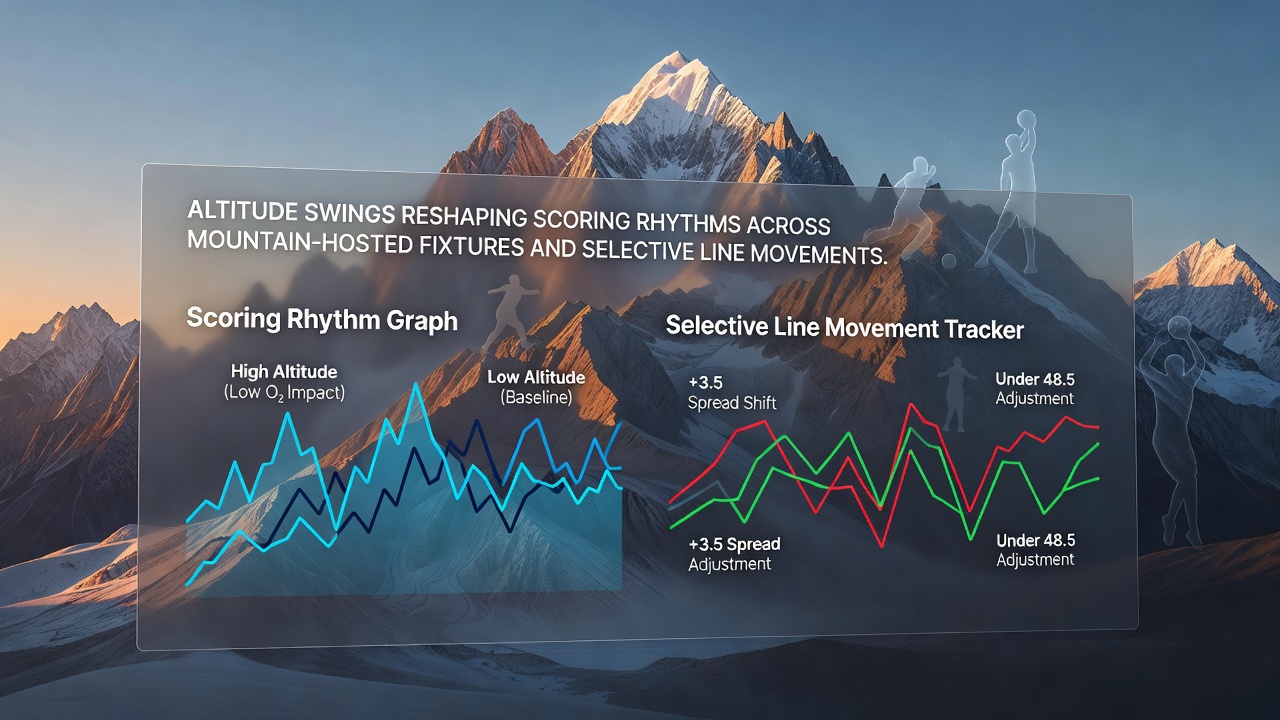
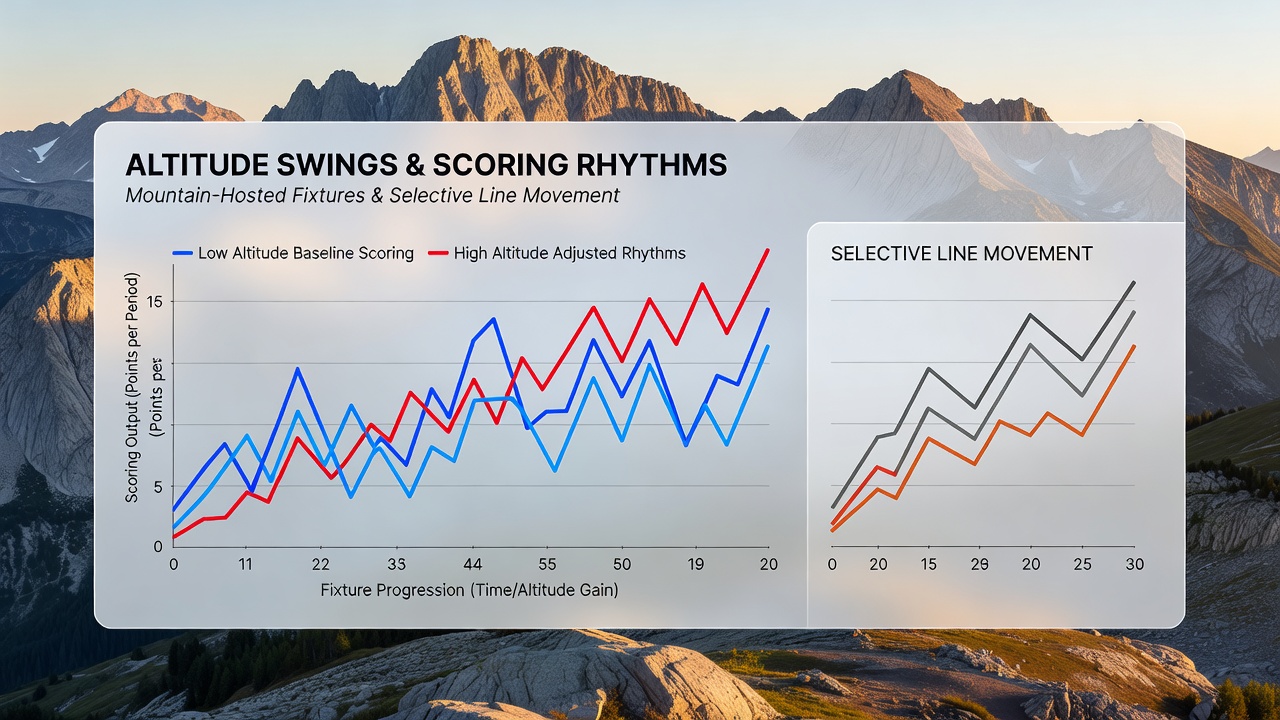
Altitude changes alter how matches unfold at elevation because thinner air reduces oxygen availability and changes ball aerodynamics, which in turn shifts goal patterns and player output across fixtures held in mountain venues. Data from CONMEBOL competitions shows that teams accustomed to sea-level conditions record fewer completed passes per 90 minutes when traveling above 2,000 meters, while local sides maintain higher possession retention rates in the same environments.
Researchers tracking South American league results between 2015 and 2025 documented a 12 percent increase in total shots attempted during the first 30 minutes of games played above 2,500 meters, followed by a measurable drop in high-intensity runs after the 60-minute mark. These patterns create distinct scoring rhythms where early pressure yields more attempts yet later stages produce fewer decisive actions compared with lowland fixtures.
Ball flight and stamina shifts at elevation
Lower air density allows the ball to travel farther on long passes and set pieces, which changes how defenders position themselves and how goalkeepers judge trajectories. Studies compiled by the University of Colorado Sports Science Department indicate that a standard 60-meter clearance gains an average of 4.2 meters at 1,600 meters elevation, prompting tactical adjustments visible in video analysis of MLS matches at Denver's stadium.
Visiting players experience earlier onset of fatigue because reduced oxygen uptake limits repeated sprint capacity, and this effect compounds when matches occur back-to-back across varying elevations. Figures from the Mexican Liga MX reveal that away sides in Mexico City average 18 percent fewer recoveries in the final 15 minutes than they record in matches below 1,000 meters.
Line adjustments and market responses
Betting operators monitor these venue-specific tendencies and adjust totals and handicaps accordingly, though the speed of those adjustments varies by market liquidity. Sharp money often targets over lines in early windows when public perception underweights the altitude component, leading to selective line movements that stabilize only after significant volume arrives.
Historical data from 2018 to 2025 shows that opening totals in high-altitude venues moved an average of 0.35 goals lower within four hours of release when professional syndicates entered positions, while recreational betting kept the line stable until close to kickoff. This creates windows where model-driven bettors identify discrepancies before broader market correction occurs.
Regional patterns across continents
European mountain venues such as those in the Swiss Super League and Austrian Bundesliga display similar but less pronounced effects because elevations rarely exceed 1,000 meters. Match reports from the Swiss Football League indicate that home sides in elevated stadiums convert 7 percent more set-piece opportunities than they do in lowland grounds, largely because visiting teams struggle with recovery runs after the initial aerial challenges.
North American examples center on MLS fixtures in Colorado and Utah, where data collected by the league's analytics department shows that matches at altitude produce 0.8 more goals per game on average than the league-wide mean. These outcomes hold steady across home and away perspectives once teams accumulate multiple seasons of exposure data.
Implications for June 2026 scheduling
With several 2026 FIFA World Cup venues located above 1,500 meters, including Mexico City and potential highland training sites, national federations have begun adjusting preparation protocols. FIFA technical documents note that teams allocated to these locations receive extended acclimatization periods, which in turn influences expected performance benchmarks used by performance analysts when modeling group-stage outcomes.
Market makers have already incorporated preliminary altitude adjustments into futures pricing for those venues, and early line movements reflect the same selective pressure observed in domestic leagues. Observers tracking these developments point to increased volatility in totals markets during the opening week of the tournament when acclimatization effects remain most variable.
Tracking cumulative effects over time
Longitudinal studies covering 15-year spans demonstrate that repeated exposure reduces but does not eliminate altitude-related performance gaps. Players who compete regularly above 2,000 meters develop improved red-blood-cell responses, yet visiting squads still exhibit measurable drops in distance covered during the second half of away fixtures.
These persistent differentials continue to drive periodic line movements as new data emerges each season, and operators refine their models to account for squad rotation patterns that either mitigate or amplify the altitude variable.
Conclusion
Altitude continues to shape scoring sequences and market behavior across mountain-hosted fixtures because physiological and physical variables interact in measurable ways that evolve with each new dataset. Selective line movements reflect the ongoing refinement of these inputs, while regional differences highlight how elevation thresholds produce distinct tactical and statistical signatures across competitions worldwide.